

The story of revolution in Iran, as told by creators
From aesthetic alterations to monarchic declarations

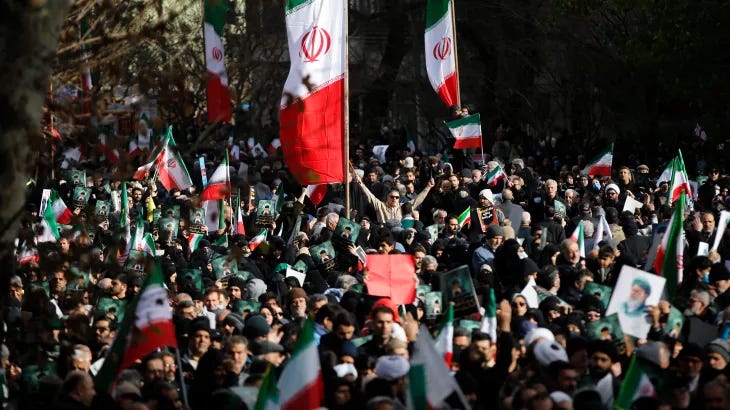
The revolution will not be televised — but it will be Instagrammed.
Getting our heads on straight about an off-the-grid uprising half a world away was always going to be an uphill battle. The internet blackout orchestrated by the Iranian regime left a blank space that creators are filling with their own agendas — jumping at the opportunity to define this current struggle for freedom before Iranians can do so themselves.
After watching hundreds of videos in the past few days, there are two main archetypes that have emerged, populating the information void and reaching massive audiences. But I want to run you through a trend that’s serving as a clear access point for online engagement.
Curating the aesthetics of revolution
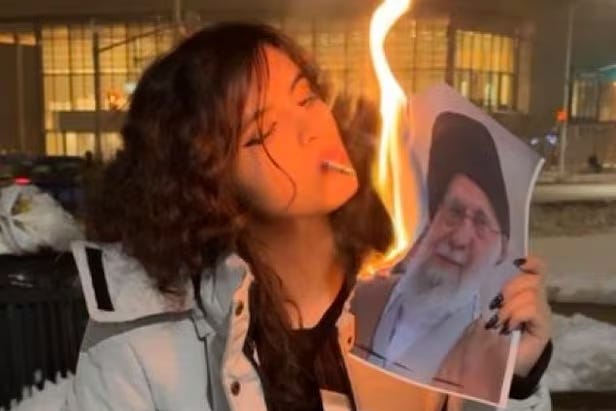
If you scrolled too fast, you might confuse these images for something you would’ve reblogged on Tumblr in 2012. These were the first posts to break through to a general American audience on Instagram: highly stylized and filtered images of young, attractive women lighting cigarettes and using them to burn images of the Ayatollah.
This tracks with the Gen Z and millennial obsession with aesthetics, especially online. It’s the same impulse that drives the performance of posts about the whimsy of 1960s and 70s Iran every time the country is in the news. And we know this is a tool that works, starting with the social justice infographics of 2020, optimized for sharability.
The major problem with this type of content remains the same: rage and rebellion aren’t pretty. The cleaned-up, curated version can’t tell an accurate story. Not that this story was accurate to begin with: the woman in the viral video is in Canada.
But that doesn’t stop creators from sculpting this kind of content to suit their agenda. It’s a jumping off point for a ton of right-wing women to use in their campaigns against “western feminism” and in elevation of “real feminism” that is coming from Iran. Some are even using AI videos to make their point.
The real images, especially of bodies piled high at morgues, are enough to activate people’s sadness and support — no filter needed. Let’s take a look at the main messengers.
ADVOCACY ARCHETYPES + THEIR BIGGEST OPPS
There are granular, nuanced takes coming from every direction online. The lion’s share of posts I’ve seen are thoughtful and deferential, even if I disagree with the message. I am grateful to be in a position where I am not tasked with delivering a verdict on who is right and how to move forward.
I’ll lay out the two dominant worldviews — which are not actually in complete opposition to one another — and you are free (and encouraged) to develop your own POV.
TYPE 1
Defining qualities:
Pro-U.S. intervention — overtly, loudly begging for American interference based on the belief that Iran will not be successful in regime change on its own
Personal ties — most frequently of Iranian descent, parents or grandparents fled after the 1979 revolution that installed the Islamic Republic
Pro-Shah — in full support of reinstituting the monarchy overthrown in 1979, boosting tons of content made by the former Shah’s son Reza Pahlavi, claiming that “everybody wants the Shah”
Personification: Elica Le Bon, 600k followers, Iranian influencer and attorney
27 videos made since protests kicked off at the end of December
16M views on Instagram, very high circulation among pro-Israel influencers
Current status: “If the U.S. doesn’t send help after making false promises, it won’t just be a betrayal. It will go down as the biggest betrayal in Iranian history.”
One video to watch: her argument that there is a “moral color code” applied in these situations, “everything designated white is considered evil … non-white is designated good”
Other voices: Patrick Bet-David, who was a Shah critic, now coming around
Strongest pushback:
Israel skeptics who view Reza Pahlavi as a puppet of Benjamin Netanyahu or an opportunist resurfacing after 45 years: “a cartoon character” who “wouldn’t survive the walk from the plane to the terminal if he were to fly back to Iran”
Creators who say this stance is out of touch with what the people in Iran want because the monarchy was also bad
TYPE 2:
Defining qualities:
Anti-imperialism — number one driver of this worldview, some promote Iranian sovereignty, others just anti-West, rejects the involvement of not just the U.S. but Israel as well, focus on America taking out democracy in Iran in 1953
Pro-liberation — following logical consistency applied to other conflicts like Palestine, most frequently promoted through a leftist lens, not free ‘til we’re all free type of wave
Pro-democracy — would like the institution of a representative government not overseen by the Shah, little consensus and few suggestions on how that happens, who’s involved
Personification: Ariana Jasmine, 789k followers, Iranian political creator
2M views on about a dozen Iran-related videos on this topic, much more active in the past few days
Co-wrote this piece:

Current status: A video on hijab rules in Iran connected to the 2022 killing of Mahsa Amini
Other voices: Drop Site News has done really interesting interviews, which is how I found Samira Mohyeddin
One video to watch: Charles McBryde, we’re “told you have two options: the first is to support imperialism to overthrow clerical fascism. And the other is to support clerical fascism to combat imperialism,” a third pole is needed that “rejects clerical fascism and royal restorationism.”
Strongest pushback:
Would it be a geopolitical conflict if there wasn’t intense infighting among the online left? There is a faction of people who are raging against Type 2 above, arguing it is a betrayal of Palestinian solidarity to wish for the removal of one of their biggest funders. Yes, actively pro-regime.
Ariana’s response: “If you support the Iranian government, which is the IGRC, you’re a fucking weirdo.”