

Influencers are an oppressed class
At least that’s what they'd like us to believe

Race, color, national origin, sex, gender identity, sexual orientation, religion, age, disability.
We have nine classes in America expressly protected against discrimination. A new demographic is angling to add a tenth: influencers. The most misunderstood, persecuted, disadvantaged group of people in our brutal world. If you still have an “I understand that I will never understand, but I stand” shirt from 2020, it’s time to break it out again.
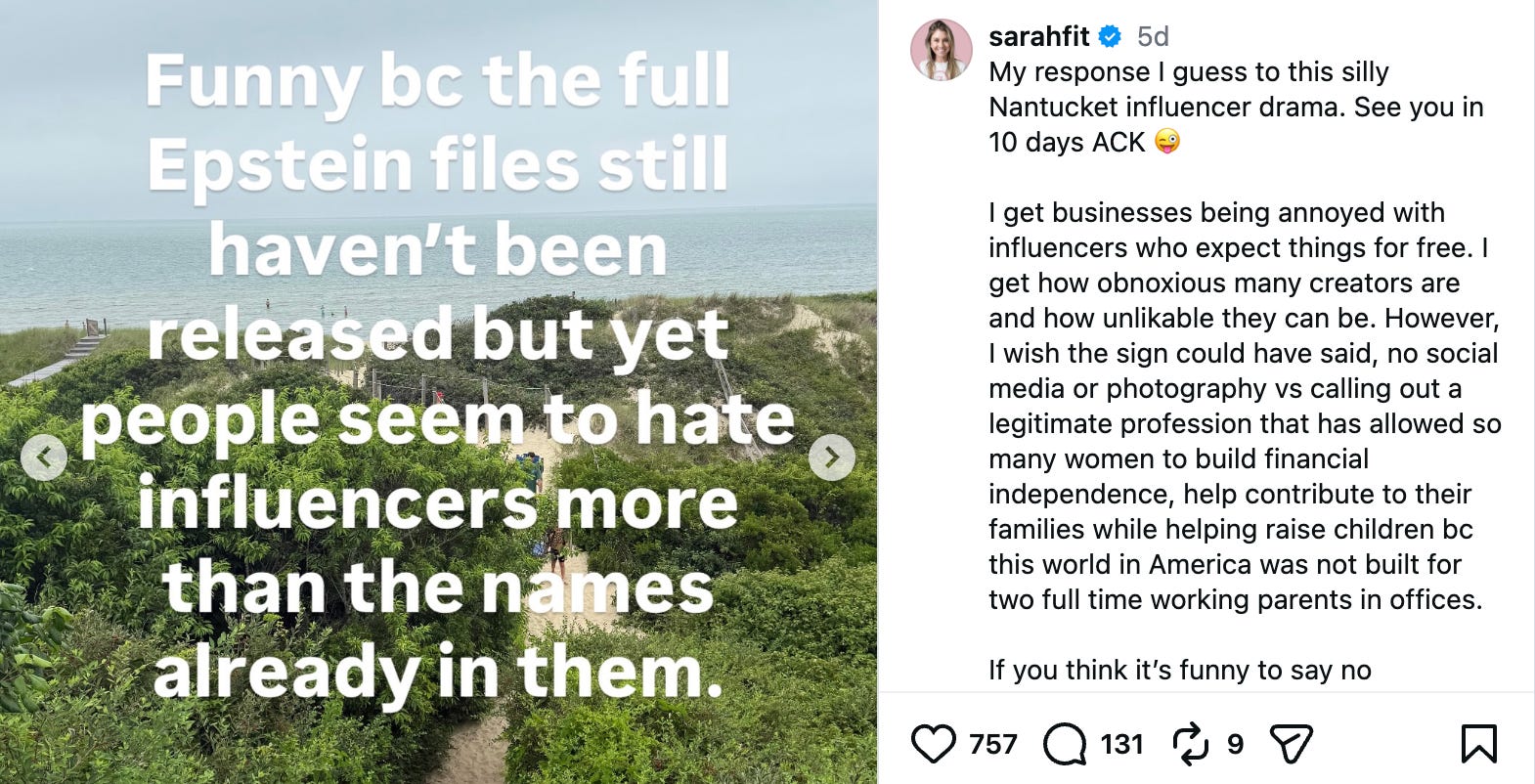
Like all good American Horror Stories, this tale’s discoverability has largely been fueled by New York Magazine. And like almost all other pieces from The Cut, I find myself humming “what kind of fuckery is this,” in the style of Amy Winehouse’s “Me & Mr. Jones,” as I dig in. For those of you who have had the pleasure of escaping this discourse, I’ll sum it up briefly:
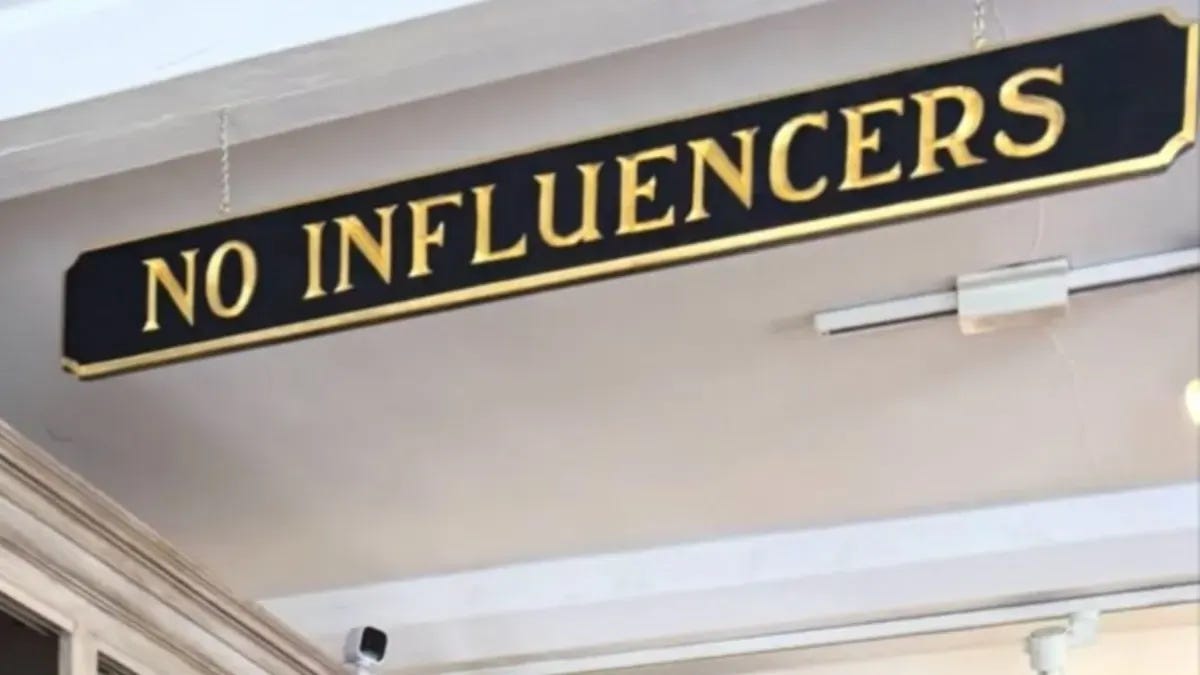
Nantucket business that sells $1,000 hand-woven baskets hangs “no influencers” sign in store
Wave of support from island locals who, too, are tired of tiny mics and ring lights
A wave of Nantucket-familiar influencers take offense in comment sections and on Stories, led by Paige Paul (née Lorenze) and her 1.2M followers on Instagram
What could’ve — and arguably should’ve — been nothing more than a sip of tea and nibble of gossip among locals and seasonal visitors became a referendum on the content industry as a whole. Influencers sailed into the America’s Cup of internet victimhood.
“It’s discrimination … women hating” — said by an influencer who just appeared on Usha Vance’s podcast. “Overtures and overtones of misogyny” — said by an influencer who attached an ad to her video complaint. “Isn’t this literally discriminating against a group of people? I don’t understand” — commented by an influencer who offers 30-minute consultations to help people with their dating app profiles for $211.
Lifestyle influencer Levi Coralynn opened the door that hundreds of women poured through. Her video that opens with “I think hating influencers has become a socially acceptable way to hate women” has 5.2M views on Instagram. Comments have been limited. It has another 1.2M on TikTok. Comments have been turned off.
Right now is a really interesting time to take the “performative oppression” strategy for a spin, as powerful people innovate new ways to oppress women — in a real way — every day. Some examples, in case the influencer force field filters out this kind of negativity: women are hunger striking in ICE detention, we have the highest rate of maternal deaths of any high-income country, police are stalking women on Flock cameras, and a congressman accused of horrific domestic violence won’t resign.
I digress. No matter where you show up online and how many people you show up to, it’s a very weird time to be a woman on the internet right now. Do we want to see or be seen? Do we want our decisions to be the product of influence or the outcome of thought? Bear witness to the cruelty we face or escape from it? Be controlled or be free?
As algorithms play a bigger role in answering those questions for us, so too do the creators who know how to game the system to focus your attention on their goals.
Signgate in Nantucket to the OpenAI brand trip in Hudson to a huge tradwife pivot on “Call Her Daddy” — three implosions of influence show us how women consumers and creators are being squeezed by our economic and political reality, whether they like it or not.
OVERT INFLUENCE
“This is one of the first industries where women have been able to build enormous businesses without asking for permission, without having to ask for maternity leave … without venture capital funding which has overwhelmingly gone to male founders … Maybe your problem isn’t influencers, maybe your problem is women with influence.” — Gabriella McCoy, digital creator
Economic liberation is a fascinating element of the creator economy, considering women make up a vast majority of the industry. This is the point, more than any other, that women have made in videos defending influencers, their business, and culture. All of them are women, almost all of them are white, and many exist in tax brackets the average viewer is never going to reach.
While critics of their “woe is we” stance have made a strong showing — “getting flown out to Bali for a brand trip, like that’s not reeking of oppression to me” kate glavan made me lol — this type of influencer is insulated from image injury by their success. Paige, who kicked this all off, is rumored to be worth upwards of $2.5M.1 She has an aspirational lifestyle brand, Dairy Boy, that has converted her followers into customers.
This economic tie builds a level of trust between influencer and audience in the (rare) moments where an opinion is shared. But even that opinion is curated, isn’t it? The response Paige offered didn’t alter the internet’s understanding of how she sees the world. She didn’t deviate from any norm. We could’ve predicted she’d feel this way.
That predictability, reliability, stability, whatever you want to call it, is something audiences love as our world becomes more and more erratic. Women are great messengers of these values. Food influencer and chef Justine Doiron commented under Levi Coralynn’s criticizing influencers = hating women video:
“... women are better at cultivating trust,” but people try to “diminish a woman’s expertise or effort with the word ‘influencer.’”
What if — hear me out — women are perfectly capable of undermining their own effort and expertise themselves?
TRANSITION LENSES
There is an extremely fine line between a) taking advantage of an opportunity and b) taking an opportunity to sell out. Some people just have quite an expansive tolerance for shilling. I am not one of them … even from influencers I, quote unquote, “trust.” If you ever hear me say I bought something on TikTok Shop, send me in the direction of the nearest hospital.
We’re in this middle ground, though, where “knowledge creators” are being activated as footsoldiers of corporations more often than ever before. These sorts of collaborations often allow creators to retain some agency and accommodate some range of opinions. The catch? There always is one, isn’t there?
Honesty or, god forbid, criticism, can jeopardize a creator’s ability to form a relationship with a brand. But inauthenticity is the unstoppable force to the immovable object that is audience trust — it can tear that relationship to shreds. And I’m seeing a lot of tatters on the timeline, I’ll tell you that.
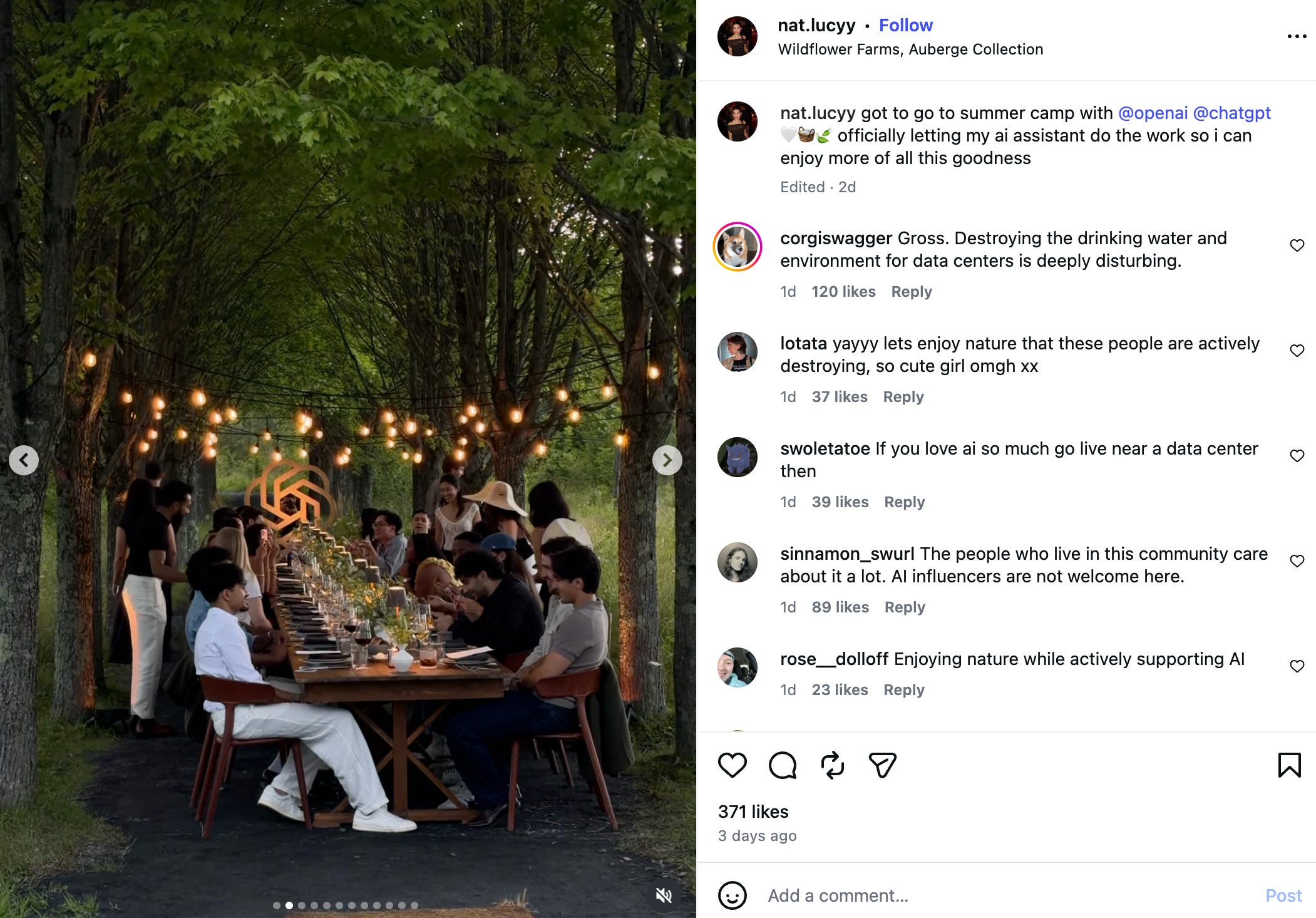
“Come with me to OpenAI’s first-ever summer brand retreat.”
We are in hell. We are in hell. We are in hell. Why is this happening:
Distrusted, despised tech giants try to tap the power of creators to curry favor with their fans
Mid-tier tech creators, unlike the aforementioned lifestyle creators, are more economically reliant on opportunities like this to pay their bills
Influencer-style trips help the narrative that tech is inextricable from lifestyle / travel / fashion / survival
I first saw the content from this trip through videos criticizing it, like the many posted by Meredith Lynch. I found it interesting that almost all of the call-out clips took a swing at women attendees, few fighting words for the men. My theory is that’s because the men focused more on the technical outcomes of a few days spent with ChatGPT’s team, less so on the “room tour” of it all.
That said, all of the attendees I identified got absolutely read for filth in their comments. As Meredith said, literally accepting a “fight for their lives” as the cost of admission. You can see in real time where the established trust shattered, in comments like: “Sick brand trip. Did they promise you access to the water supplies when we lose it?”

Mortgaging your expertise to the highest bidder is a choice that influencers have to make any time they get a brand deal. As tech gets more sinister, surveillance culture spreads, and appetites really sour on spreading their gospel, creators, especially women, will have to consider the risk of collaboration (audience destruction) versus the reward (a check).
People are starting to place a premium on that value alignment. And it’s causing some curious pivots we can read as predictive political indicators.
COVERT INFLUENCE
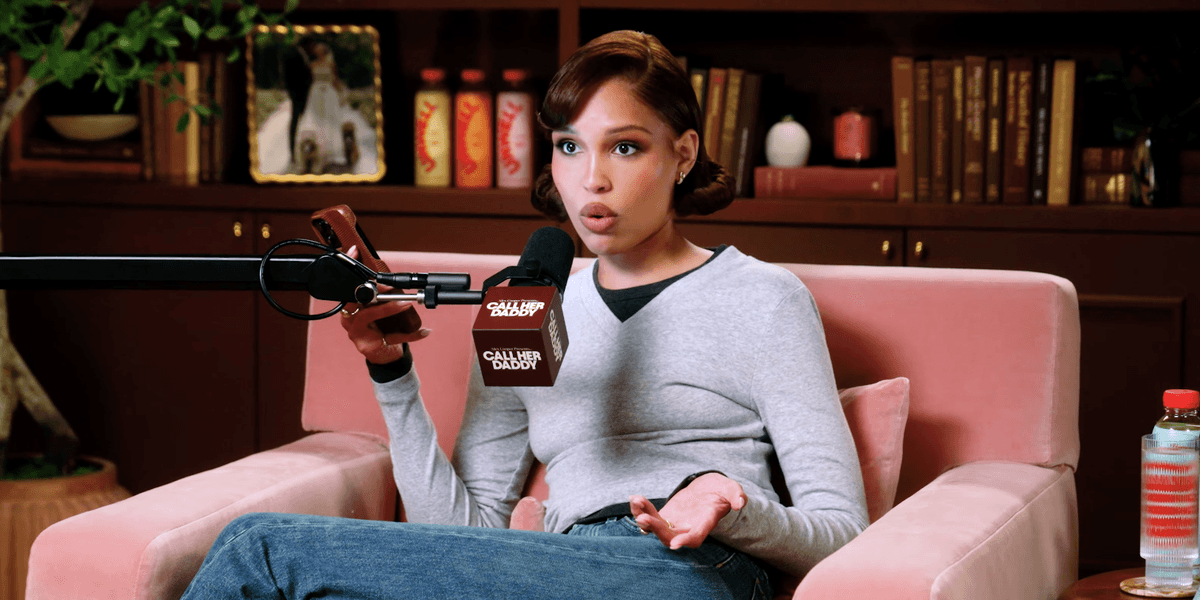
“I’m not who you think I am, despite the fact that I have architected an entire persona and universe that would make any reasonable person think that is exactly who I am.” This is my best effort to summarize the energy of Mormon-fashion-cooking-parenting influencer Nara Smith basically begging people to believe that she is not, in fact, a tradwife.
Nevermind that creators allege she used to literally hashtag #tradwife on her old posts, this same plea is the actual title of the “Call Her Daddy” episode she appeared on last week. It has 1.6M views on YouTube. Millions more on clips. This felt like a shocking clarification from someone who curates every curl and measures every teaspoon of their image and output. Why?
As much as routine and repeat format can provide the stability audiences crave, there’s one thing they’re prioritizing more: relatability. Cooking dinner from scratch for your kids in a $15,000 couture Schiapparelli gown … in this economy … is about 30 lightyears outside the reach of the average viewer. Nara, as a branding and image professional, knows this.
Such a big influencer with such a clear identity would not take a rebrand lightly. But something in our sociopolitical culture is signaling to her that it’s the only option. Women are forced to contend with what longevity looks like for an influencer online (and I’m not even referring to age, that’s a whole other fuckin’ problem).
Nara Smith is telling us that she thinks association with “tradwife” content is starting to harm her brand, after years of seeing it boost her brand thanks to the proliferation and success of MAGA housewife influencers. Nara is hedging her bets to try to stay en vogue online. And she’s not the only one.
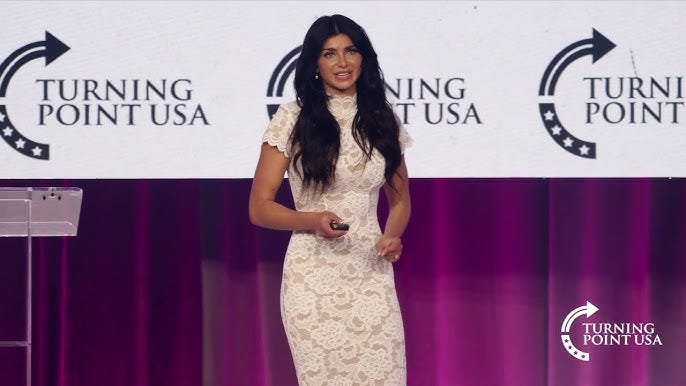
Young marriage advocate, host of the “Good Wife” podcast, and wearer of “normalize liking your husband” merch, Savanna Stone is also distancing herself from the “tradwife” moniker. Interesting. But I guess that renunciation is only as meaningful as the content made to prove it. Both Stone and Smith (to differing degrees) are still committed to projecting traditional (read: conservative) home and family values.
Back to choices influencers have to make: Both of these women could have doubled down on the tradwifery. As we know, there’s a solid sum of money to be made by moving right.
It comes back to these economic conditions women in this field are moving through:
“Regular” lifestyle influencers attract viewers by touting economic freedom
“Specialized” industry influencers piss off viewers out of economic necessity
“Value”-promoting influencers comfort viewers by selling economic dependence
Of course, they can only sell you the safety and comfort of submission because they have a podcast mic to say it into. In a tradwife reality, that is obviously something they’d have to give up to collect the benefits of economic dependence. Revoking women’s right to vote, for instance, which Savanna Stone is well-known to support.
There are levels to this trad influencing: some like Nara sprinkle, others like Savanna spoon, and Rachel Jankovic HEAPS. Madeline Peltz gives us a look at that approach in a piece about the youngest daughter of Pastor Doug Wilson, who I’ve covered.
This puts into perspective that there are bigger risks to women than adopting the opinion that rich, hot influencers are getting the short end of the stick on vacation. But all of this movement and subsequent dissection tells us something — influencers are more responsive than ever to the political ground shifting underneath them (negatively and positively).
I found this amazing YouTube video by a creator named Ashley Embers. In it, she says: “Influencers are only as wealthy as their audience ‘cause brands expect sales. And the thing is, audiences are struggling these days.” The economic success of influencers is placed in the hands of the consumer … especially women.
The writing is on the wall. Read it!
🥹 Something to make you smile today 🥹
Why A Wisconsin Stranger Lent His SUV to a Stranded Heavy Metal Band, Saving Their Gig

“The Autumn Kings had just played Rock Fest Wisconsin in Chippewa Valley when their van broke down. The Detroit-based trio called every mechanic in the area, but were told the engine would take two days to fix.
The band had 10 hours to get to its next show, the Upheaval Festival in Grand Rapids, Michigan, about 500 miles away.
A stranger named Ernie stopped to ask if he could help. He ended up giving the band the keys to his Ford Explorer for several days, so they could drive more than 1,000 miles and finish the tour.
‘With all the things you hear, about how the world is always going to hell, there are truly generous human beings, beyond comprehension,’ said Jake Diab, guitarist and vocalist of the band.’”
Grace Note: I’ve actually been sitting writing this post for 112 hours and feel like the life has been sucked out of me … until I read this. Have never met a bad Ernie (Johnson, Sesame Street, now this)!
paige just married a tennis player worth a hell of a lot more than that
So…
It’s misogynistic to hate on Influencers Andrew Tate and Clavicular?
Uh-hunh.
I can’t stand that I can’t stand what I can’t stand.
i saw a sincere post on LinkedIn from someone saying it was "stigma, plain and simple."